
Petrol or diesel generator?

The choice between petrol and diesel often seems tied to fuel price. In fact it is about how often and how long you will use the generator. If the power is out now and then for a couple of hours, that is one question; if the generator runs for days on a site, it is quite another.
The overall selection guide: how to choose a generator. Here — only the fuel question. Range: Generators, brand Scheppach. Prices change — check the card.
Quick comparison
| Criterion | Petrol generator | Diesel generator |
|---|---|---|
| Purchase cost | Usually lower | Usually higher |
| Weight and size | Usually lighter, more compact | Usually heavier |
| Suited to | Rare use, home, garden, mobile use | Regular, longer operation, a site |
| Continuous work | Fits shorter cycles | Built for heavier duty |
| Fuel storage | Petrol can age over a longer time | Diesel is usually more stable, but keep it clean |
| Example in the range | SG3200x, SG2500i, SG7100x | SG5200D |
When to choose petrol
- Outages are rare — the generator sits and is started now and then.
- You need a compact, portable unit.
- You want a lower starting price.
- The load is up to a few kW: lighting, fridge, boiler controls, tools.
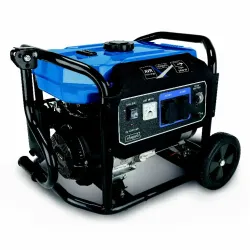
Example: SG3200x — 2.5 kW rated, 2.8 kW maximum, 230 V, petrol. Suits both home and tools. If the load is voltage-sensitive, consider an inverter model.
When to choose diesel
- The generator will run often and for long — on a site, a farm, in a workshop.
- You need more resilience under continuous load.
- You want a fuel that usually stores more stably.
- You need both 230 V and 400 V outputs.
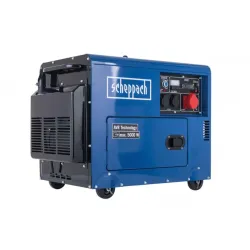
Example: SG5200D — 3.0 / 3.3 kW on 230 V, 4.2 / 5.0 kW on 400 V. The only diesel model in the range, so if you need diesel the choice is clear, but always check current availability on the card.
And if you need 400 V and petrol?
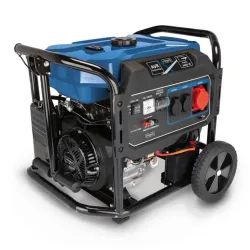
Then look at SG7100x: a petrol three-phase model, 400 V — 5.0 / 5.5 kW, 230 V — 2.0 / 2.2 kW. It shows something important: on the 230 V socket the power is considerably lower. See 230 V or 400 V generator.
Three situations, three different choices
Country house, outage a couple of times a year. A simple petrol model is logical: lower price, easier to move. More important than fuel type here is that the generator is test-run before it is needed.
Farm or small site where power is needed every week. Here you should already think diesel: SG5200D is meant for more regular use and also gives 400 V. The difference in the initial price is visible, but weigh how often the unit will be used.
Mobile use — garden, parties, small repairs. Petrol and compact size. If sensitive electronics must be powered too, look at the inverter option.
Winter and cold
In the cold, starting the engine can get harder regardless of fuel type. Diesel can thicken at low temperatures if it is not suited to winter conditions. For petrol the risk is lower, but starting is affected by battery and oil. Prepare the generator in good time for winter, check the fuel type and follow the manufacturer’s advice. For specific temperature limits see the manual.
Run time and fuel reserve
How long a generator runs on one tank depends on the model, tank size and load. We do not promise specific figures, because they change with load. In practice: before the outage season check the manual, roughly calculate consumption at your load and prepare a safe fuel reserve in a suitable container.
Maintenance and fuel
- Petrol: do not pour in old fuel, do not keep a full tank for months without need; follow the manufacturer’s guidance on fuel type.
- Diesel: watch fuel cleanliness, filters and cold conditions.
- Both: oil level before every start, periodic test run, storage in a dry place.
Exact intervals and fuel requirements are set by the manual — check it for your model.
Total cost — how to think honestly
When comparing petrol and diesel, look beyond the label. Include the purchase price, expected running time per year, fuel costs, storage and maintenance. If you will use the generator a couple of times a year, the larger purchase of a diesel model pays back less often. If you run it regularly, the balance between purchase and operation can flip. Check current prices on product cards.
Two models side by side: SG3200x and SG5200D
Both are classic AVR generators with different fuel and power. SG3200x is a petrol model with 2.5 kW rated power on 230 V — more compact and easier to move. SG5200D is a diesel model with 230 V and 400 V outputs, meant for heavier load and longer work. The first suits rare use and mobility, the second — when the generator becomes a working tool. Before choosing, add up your load: how to do it.
Short guide
- Rare, home/garden/tools → petrol.
- Frequent, long, a site → diesel.
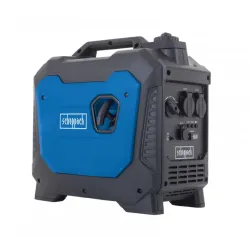
- Sensitive electronics → inverter, which in our range is petrol.
- Three-phase motor, petrol → SG7100x class; three-phase and long work → SG5200D.
When there is no point overpaying
Diesel is not a “higher level” choice for everyone. If your task is lighting, boiler controls and a fridge a few hours a year, a diesel unit is an unnecessary investment. Likewise a petrol model is not a “simple” solution for long work: if you plan to run the generator every day, it is worth rethinking whether petrol is the right choice. The honest answer usually lies in your work schedule, not the fuel price.
Fuel safety
- Store fuel only in approved, labelled containers, in a safe place outside living spaces.
- Never refuel a running or hot engine.
- Keep open flames and sparks away when refuelling.
- Wipe up spilled fuel before starting the generator.
Common mistakes
- Buying diesel “because it’s better” for a backup generator that will run twice a year.
- Buying petrol for a unit that will run day after day.
- Forgetting fuel storage rules.
- Not looking at power on 230 V and 400 V separately.
Start with power: how to calculate generator power. Home scenarios: generator for home.
FAQ
Is a diesel generator more economical?
In long operation often yes, but the purchase is usually more expensive. Calculate by actual running time, not just fuel price.
Can a petrol generator be kept unused for a long time?
Yes, if you follow the storage guidance. Fuel can age when left standing — follow the manual.
Does any of these models suit home backup?
Depending on the load. For a small backup a petrol model is often enough; see generator for home.
Reviews
Be the first to review this article.
Write a review