
Kitchen or bath mixer: what is the difference

“Both are chrome mixers” — that is not a selection criterion. Kitchen and bath/shower mixers solve different jobs. This page helps you not to confuse cards on the mixer tap shelf. Basic choice: how to choose a mixer tap.
Short difference table
| Kitchen | Bathroom basin | Bath / shower | |
|---|---|---|---|
| Main job | Pots, dishes, frequent flow | Hands, face washing | Bath and/or shower |
| Spout | Often longer / higher, swivel | More compact | Different: outlet to shower, diverter |
| Typical mistake | Taking a “bath” model | Taking a kitchen long spout | Taking a basin mixer without a diverter |
Kitchen — what to look for
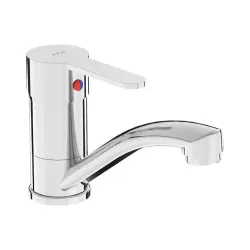
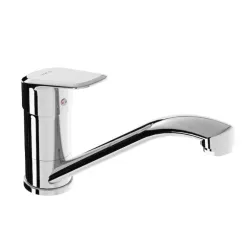
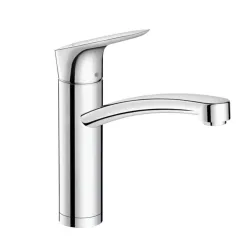
You need water to hit the centre of the sink and a pot to fit under the spout. So look at spout mm on the card. Examples: Lyra Smart 143 mm vs Talas Trendy 210 mm — that is not “better/worse”, but a depth/height question. Premium reference: Hansgrohe Logis 160.
Bathroom basin
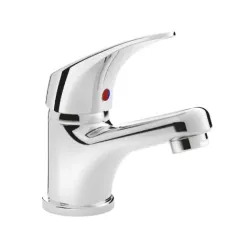
Here you rarely need a 210 mm “kitchen” arc. More compact: Jika Talas for basin, Jika Cubix 90. If you take a kitchen spout on a small basin, water will splash over the edges.
Bath and shower
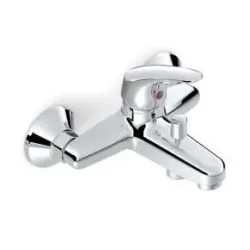
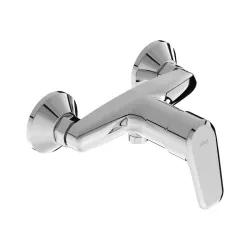
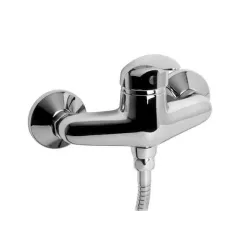
Here a diverter (bath ↔ shower) and shower connection appear. A basin mixer does not do that. Examples: Talas for bath, Talas Trendy for shower, Lyra for shower.
When you may “swap” and when not
- Must not: put a bath/shower mixer as a kitchen one “because it’s cheaper”.
- Must not: put a basin mixer on a bath if you need a shower diverter.
- May: choose different brands in one room if connections and spout are correct — design is secondary.
What’s next
Mounting type: built-in or deck-mounted. Parameters: spout and cartridge. Replacement: how to replace. Range: Mixer taps.
Reviews
Be the first to review this article.
Write a review