
How to choose a saw for woodwork

There is no single “best” wood saw. There are different cuts — and each suits a different tool. Someone who wants a straight board will struggle with a jigsaw. Someone who wants a curve will not get there with a circular saw disk. So the choice starts with: which cut will you make most often?
Below — circular saws, jigsaws, reciprocating saws, mitre saws and hand saws. We skip prices; depth, blade and what is in the box matter more.
Straight cuts — circular saw
A circular saw cuts with a disk. There are mains and cordless models. Typical work: boards, panels, straight cross-cuts.
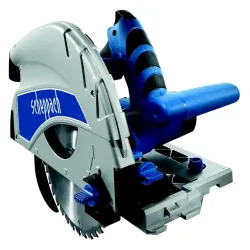
- PL75 — 1600 W, 230 V, blade 210×30 mm, 4500 rpm. Depth up to 75 mm (90°) and 55 mm (45°). Suits boards and solid wood; 1400 mm guide rail sold separately.
- PL55 with two 700 mm rails — 1200 W plunge saw with rails included.
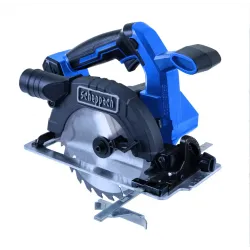
- BC-HCS165-X bare tool — 20 V, 165 mm blade, depth up to 55 / 40 mm. No battery (GEN2); GEN1 does not fit.
A 165 mm cordless saw and a 210 mm mains PL75 are not “the same depth in another pack”. Compare depth and whether you need a rail. For a bare tool — remember a GEN2 battery.
Curves and cut-outs — jigsaw
A jigsaw is the right tool for curves, panel cut-outs and work where a circular disk is too straight and awkward.
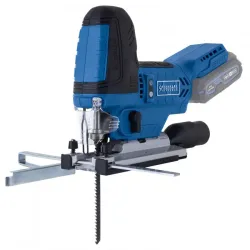
- BC-JS254-X — 20 V, 25.4 mm stroke, 1000–3000 min⁻¹; up to 100 mm wood, 10 mm metal, 15 mm plastic. Anti-splinter guard and dust extraction.
- C-JS220-X — 0–2400 strokes/min, 20 mm stroke; up to 80 mm wood. GEN2 bare tool.
Check maximum thickness on the model. “One jigsaw for all wood” is a myth — thick timbers often need another type.
Demolition, pallets, branches — reciprocating saw
A reciprocating saw is a fast, rough friend: demolition, pallets, branches, jobs where furniture-grade smoothness is not the goal.
- BC-RS250-X bare tool — 28 mm stroke; up to 250 mm wood, 20 mm soft metal, PVC up to 130 mm.
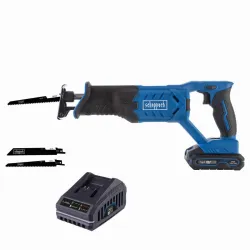
- BC-RS280-X kit — up to 255 mm wood; wood and metal blades, 2.0 Ah and 2.4 A charger in the kit.
- C-RS100-X bare tool — up to 115 mm wood; no battery.
250 mm and 115 mm in wood is a very different range. Bare tools often need a blade bought separately; a kit may include one. Do not buy “the biggest number” for thin branches — or the opposite.
Angles and longer stock — mitre saw
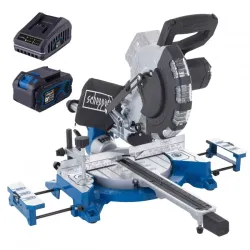
BC-HM216-X kit — sliding mitre saw, 20 V, 210 mm blade. At 90°/90° up to 340 × 65 mm. Kit includes 4.0 Ah battery and 2.4 A charger. Suits laminate, boards and timbers when you need repeatable angles and a wider cut than a small circular saw freehand.
If your work is mainly floor boards with precise angles, a mitre saw is often easier than fighting a circular saw without a guide.
Hand saw when you do not need power
Among hand saws there are wood and metal tools — do not mix them up.
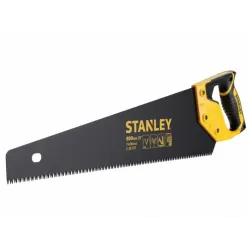
- Jetcut Appliflon 500 mm, 7 TPI — cross and rip; Appliflon tooth coating.
- Hand saw 7 TPI × 550 mm — longer blade, same 7 TPI.
- Tradecut 380 mm, 8 TPI and Tradecut 450 mm, 11 TPI — different length and tooth density.
- Metal saw 300 mm — for metal, not boards.
TPI (teeth per inch): denser teeth — finer cut; coarser — faster rough work. Choose by material, not because “a longer blade looks more serious”.
How to choose in four steps
- Define the cut: straight / curve / demolition / angles / hand.
- Compare depth or max material thickness.
- Check kit vs bare tool (GEN2).
- Add blades or a rail if they are not in the box.
Typical mistakes
- Buying a jigsaw “for all wood” when the work is straight boards — then a circular saw or mitre saw is the right type.
- Mixing up a bare tool and a kit: without a GEN2 battery the bare tool does not run.
- Choosing by “the biggest depth” when you cut thin branches or laminate.
- Buying a metal saw for a board (or the reverse) among hand saws.
Before you buy
Pick the type by cut, then compare depth, blade and battery. About V / Ah / Nm: what V, Ah and Nm mean. When sawing — eye and hearing protection: protective gear.
Reviews
Be the first to review this article.
Write a review