
Account
Catalog
Information
Cart

Your shopping cart is empty!

Add products from the catalog to start shopping.

Continue

PALĪGS

Which saw should I choose?

For wood, demolition or the workshop — answer a few questions about the cut you need and where you work, and PALĪGS will help you tell a circular saw, jigsaw, reciprocating saw and table saw apart and pick the right type.

One helper — many solutions

PALĪGS

Start choosing

Choosing a saw rarely starts with the brand. First you need to know what cut you will make — a straight line in a board, a curve in a panel, rough demolition, or precise repeat cuts in a workshop. The type follows from the cut, not the other way round.

What cut do you need?

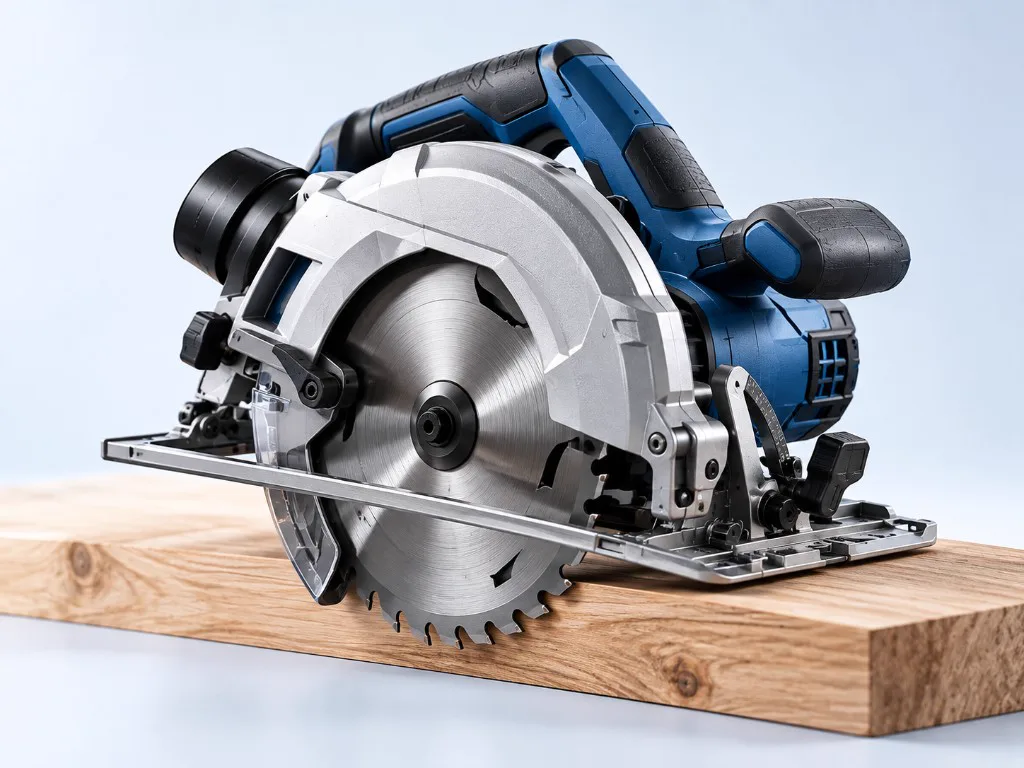
Circular saw — straight cuts

A circular saw is made for straight cuts in boards, sheets and flooring. It cuts a line quickly and cleanly, which is why it is so common on site and in renovation work.

Jigsaw — curves and cut-outs

A jigsaw suits curves, cut-outs and places where a circular saw is simply too “straight”. If you need to cut a shape or go round an obstacle, it is often the right pick.

Reciprocating saw — demolition

A reciprocating saw is for demolition and rough cutting — when access and speed matter more than a smooth edge. It copes with awkward positions where other saws cannot reach.

Table saw — workshop precision

A table saw is a workshop tool for accurate, repeatable cuts, when you work at a bench and the result needs to be consistent.


Site or workshop

If you work outdoors or in different places, portable power tools are usually more convenient. If you cut at a bench every day and want a stable, repeatable result, a table saw becomes logical. Where the work is mixed, think about which cut you do most often and start there.

PALĪGS does not mix up chainsaws with power saws: this helper is about power-tool saw types. Chainsaws are a separate direction.

Common mistakes when choosing a saw

  • Buying a circular saw for jobs that are mostly curves and cut-outs.
  • Expecting a reciprocating saw to leave a clean, finished edge.
  • Choosing a table saw for occasional site work where portability matters.
  • Thinking only about the saw and forgetting the blade — the right blade often changes the result.

If you are not sure

Many people know the material and the outcome but not the saw. That is fine — answer what you are cutting and where, and choose “I don’t know” wherever you are unsure. PALĪGS leans towards the safer, more versatile type instead of guessing.

How to use this helper

Tell us the cut and where you work. If you are unsure, choose “I don’t know”. You will get a suitable type and real products from the INVENTĀRS catalogue.

Frequently asked questions

Is a chainsaw the same thing?
No. A chainsaw is a garden and forestry tool. This helper is for power-tool saws used in building, renovation and workshop work.
When do I need a jigsaw?
When you need to cut curves or cut-outs rather than long straight lines through boards.
Circular saw or table saw?
A circular saw is for site and mobile work. A table saw is for the workshop, when you need repeatable accuracy at a bench.
Is a reciprocating saw suitable for wood?
Yes for demolition and awkward positions. For clean finishing cuts, people usually choose a circular saw or a jigsaw.
Which saw is best for straight cuts in boards?
A circular saw is the usual choice for straight lines in boards and sheets, especially on site.
Does the blade matter as much as the saw?
Yes. The right blade for the material often changes the result as much as the saw itself.

Useful guides

Trusted brands

Proven quality

Fast delivery

Locker €4.90 · LV · LT · EE

Easy returns

14 days

Secure payments

Online banking

Support

Help choosing