
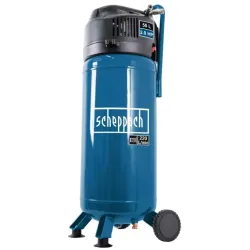
Compressor for air tools
An air tool is not “an electric tool with a different plug”. It only works when it gets enough air at the right pressure. The tank is storage; the pump is supply. If supply lags, you feel it immediately: torque drops, drilling stalls, impact goes soft.
Basics: how to choose. Range: Compressors · air tools.
One simple formula
- Take tool L/min from the card.
- Add reserve for longer work / hose / filters.
- Compare with compressor delivery at working pressure. Intake-only numbers are optimistic.
- Confirm max bar covers tool working pressure.
The tank helps pulses and fewer starts. It does not replace missing L/min.
Tools and air need (confirmed examples)
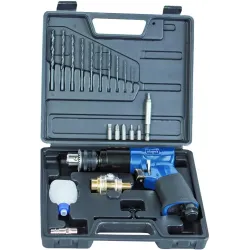
- Scheppach 3/8" air drill — card average 141 L/min.
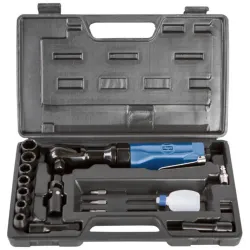
- Scheppach 1/2" ratchet kit — card average 77 L/min.
- Scheppach 1/2" impact kit and typical DIY 1/2" impacts — often about 120–184 L/min average (model-dependent). Silent 24 L is often a compromise or not enough if impact is your main job.
- Nailer / stapler — short pulses; e.g. ANS 15-50.
- Orbital / die grinder — often high use; Scheppach Si manuals exclude eccentric sanders as a Silent target.
- Spray gun — start from gun L/min: painting.
- Sandblast gun — very high use; often beyond DIY Silent.
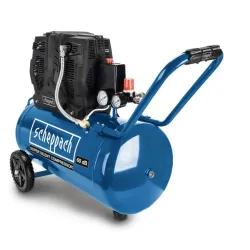
Scheppach Silent: honest limits
How to choose step by step
- Pick the main tool — not “everything someday”.
- Write down L/min and bar.
- Open 2–3 compressor cards and look for delivery / FAD.
- If you use several tools, size for the hungriest.
- Check hose, couplers, filters — a bad chain steals flow.
Garage context: garage guide. Mid garage without heavy impact: HC51Si / HC51V.
Common mistakes
- Comparing tank litres only.
- Treating intake as delivery.
- Assuming silent “runs everything”.
- Expecting two tools at once on one small compressor.
Parameters: bar / l/min / tank. Brand: Scheppach.
Reviews
Be the first to review this article.
Write a review