Account
Catalog
Information
Cart

Your shopping cart is empty!

Add products from the catalog to start shopping.

Continue

PALĪGS

How to choose a drill?

Not sure which drilling tool to choose? Answer a few simple questions about the job and the material — PALĪGS will help you tell a cordless drill, an impact drill and a rotary hammer apart, and find the right type for your work.

One helper — many solutions

PALĪGS

Start choosing

A drill looks simple — until you start comparing volts, Nm and SDS. In practice the choice becomes clear when you start with the job: drill, drive screws, or both, and the material you will work with most often.

This PALĪGS helper is there to find the right type. Once the type is clear, browse real products in the catalogue — for example cordless drills or rotary hammers.

Which drill should you choose?

Start with the task. If you are fixing a shelf, assembling furniture or driving a handful of screws, a compact cordless tool is often enough. If you need to drill brick for wall plugs, the type of tool is already a different question. If concrete is an everyday material, you will usually want a rotary hammer — not a “more powerful drill”.

Cordless drill, impact drill or rotary hammer?

This is the one distinction worth understanding before you buy.

Cordless drill

Suited to wood, furniture, plasterboard and light renovation at home. Compact, cord-free and quick to get going. Do not buy it as your concrete solution if concrete will be regular work — that needs a different type of tool.

Browse: cordless drills.

Impact drill

Adds a hammering action that helps in brick and block. A sensible compromise if you occasionally drill masonry but concrete is not your daily work. It is still not a rotary hammer.

Browse: impact drills.

Rotary hammer

Built for concrete and stone. The SDS chuck and the hammering mechanism belong to a different class of tool. If you only need a couple of holes in concrete a year, a heavy professional model is not required — but trying to push regular concrete work through a light drill is usually slow and tiring.

Browse: rotary hammers.

How to choose a drill for wood, metal and concrete

Drilling wood

Furniture, boards, light assembly — the typical cordless drill territory. The right bits matter as much as the tool itself.

Drilling metal

You need a steady hand, a suitable bit and often a lower speed. The type of tool is still decided by whether the job is light household work or heavier use — metal is not automatically “rotary hammer work”.

Drilling concrete

This is where a rotary hammer is usually the honest answer. A cordless drill can sometimes cope with a very light, one-off task, but that is not the same as an SDS tool for regular work.

Drilling brick and masonry

An impact drill is often enough. If the material is harder or the work more frequent, PALĪGS will steer you towards a rotary hammer.

Which drill for the home?

Typical home scenarios: a shelf, furniture assembly, wall plugs, small renovation jobs, occasional use. Convenience and a battery win here. There is no point buying the heaviest model just because its numbers look impressive.

If most of your work is driving screws, also look at cordless screwdrivers.

Which drill for driving screws?

If 90% of the work is screws, a drill may be more than you need — a screwdriver is often more comfortable. If you need both holes and screws, a classic drill makes sense. Impact for driving screws and impact for drilling masonry are not the same thing, so do not mix tool types just because the word “impact” appears.

Which drill specifications matter?

Specifications help once the type is clear.

Voltage (V)

Roughly indicates the class of the battery system — not automatically the quality of the work. A higher voltage is no guarantee that a tool is suited to concrete.

Battery capacity (Ah)

How long you can work between charges. For household jobs a compact battery is often enough; for longer sessions Ah becomes more important.

Torque (Nm)

Important for driving screws and for heavier loads. It is not the first question if you do not yet know the type.

Speed

Affects how drilling feels in different materials. In practice, control and the right bit often matter more.

Chuck

A standard chuck takes typical round-shank bits. SDS is for rotary hammers. Do not mix the two systems.

SDS

SDS is not “a better drill”. It is a rotary hammer system for concrete. An SDS bit is not the right partner for a standard drill chuck.

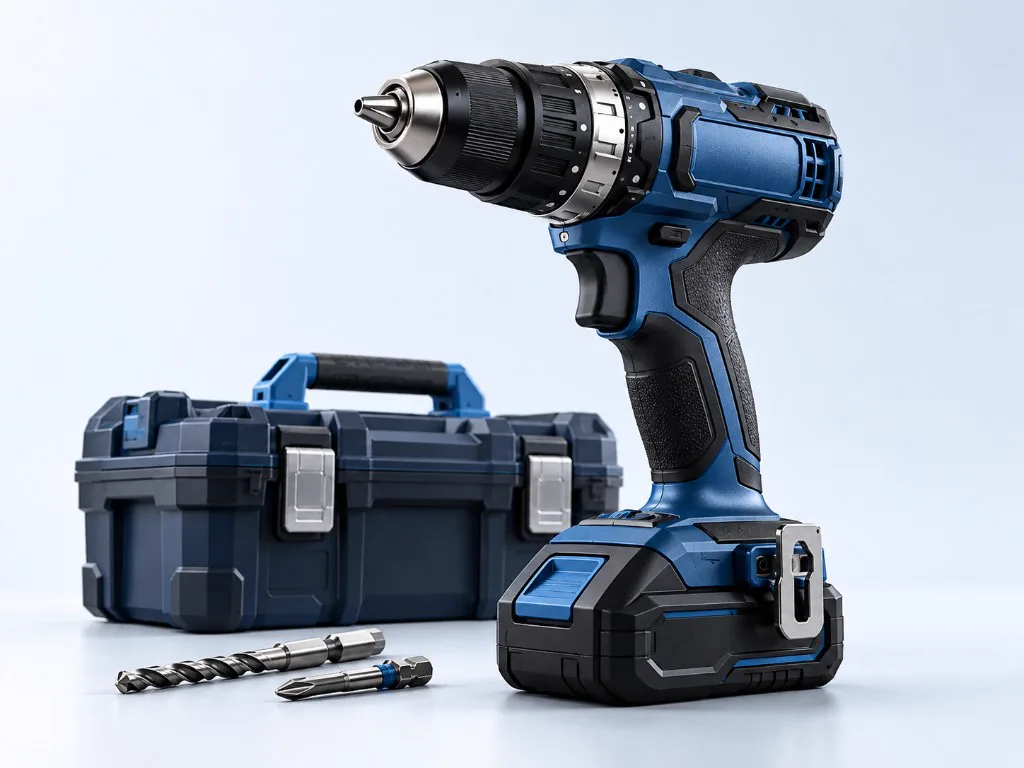
How much power does a drill need?

As much as your typical job requires — not more “on paper”. For light home renovation, excess power often just means extra weight. For regular heavy work it is the other way round: an underpowered tool tires you out and wears itself out.

Which drill for home renovation?

For most home renovation: a cordless drill plus the right bits. If you occasionally meet brick, consider an impact drill. If you plan a lot of concrete, a rotary hammer is a more honest choice than hoping a light model will cope.

When do you need a rotary hammer instead of a drill?

When the material is concrete or stone and the work is not a one-off “I’ll try it”. If PALĪGS suggests a rotary hammer after the material question, it is not an upsell — it is the logic of the tool type.

Common mistakes when choosing a drill

  • Looking only at volts and ignoring the tool type.
  • Buying the “most powerful” model for light, occasional work.
  • Mixing up an impact drill and a rotary hammer.
  • Ignoring the battery platform if you plan several cordless tools.
  • Forgetting accessories — the bit often decides the result.

How to use this helper

Answer about the job, the material, how often you work and whether you need a battery kit. If you are unsure, choose “I don’t know”. The recommendation is based on your steps, not on a single technical figure.

Frequently asked questions

How do I choose a drill if I do not know the specifications?
Start with the job and the material, not with V or Nm. PALĪGS asks exactly that — you can find the type without technical vocabulary.
What is the difference between a drill and a rotary hammer?
A drill suits wood, metal and light work. A rotary hammer with SDS is for concrete and stone — a different mechanism, not simply a bigger drill.
When do I need an impact drill?
When you sometimes drill into brick or block but concrete is not everyday work. For regular concrete a rotary hammer is usually the better fit.
Can a cordless drill handle concrete?
For very light, occasional work at home it sometimes copes. For regular concrete it is generally not a substitute for a rotary hammer.
Is a cordless drill enough for home renovation?
Often yes — for wood, furniture, plasterboard and light assembly. If you plan a lot of concrete, be honest about the type from the start.
What do V, Ah and Nm mean?
V roughly shows the battery system class, Ah how long you can work between charges, and Nm the torque for driving screws. Compare them within a type, not before choosing it.
When is a screwdriver better than a drill?
When the main job is driving screws rather than making holes. If you need both, a drill is usually more practical.
Will an SDS bit fit a regular drill?
No. SDS is a rotary hammer system. A regular chuck needs bits with a matching round shank.

Useful guides

Trusted brands

Proven quality

Fast delivery

Locker €4.90 · LV · LT · EE

Easy returns

14 days

Secure payments

Online banking

Support

Help choosing