
Account
Catalog
Information
Cart

Your shopping cart is empty!

Add products from the catalog to start shopping.

Continue

PALĪGS

Which sander/grinder should I choose?

For metal, wood or tight spaces — answer a few questions about the surface and access, and PALĪGS will help you tell an angle grinder, a belt sander and a straight grinder apart and choose the right type for the job.

One helper — many solutions

PALĪGS

Start choosing

Grinding and sanding are often thrown into one “angle grinder” box. In practice the type depends on the surface and access: metal, a flat wooden face, or a tight space where a large disc simply does not fit.

The main split in practice

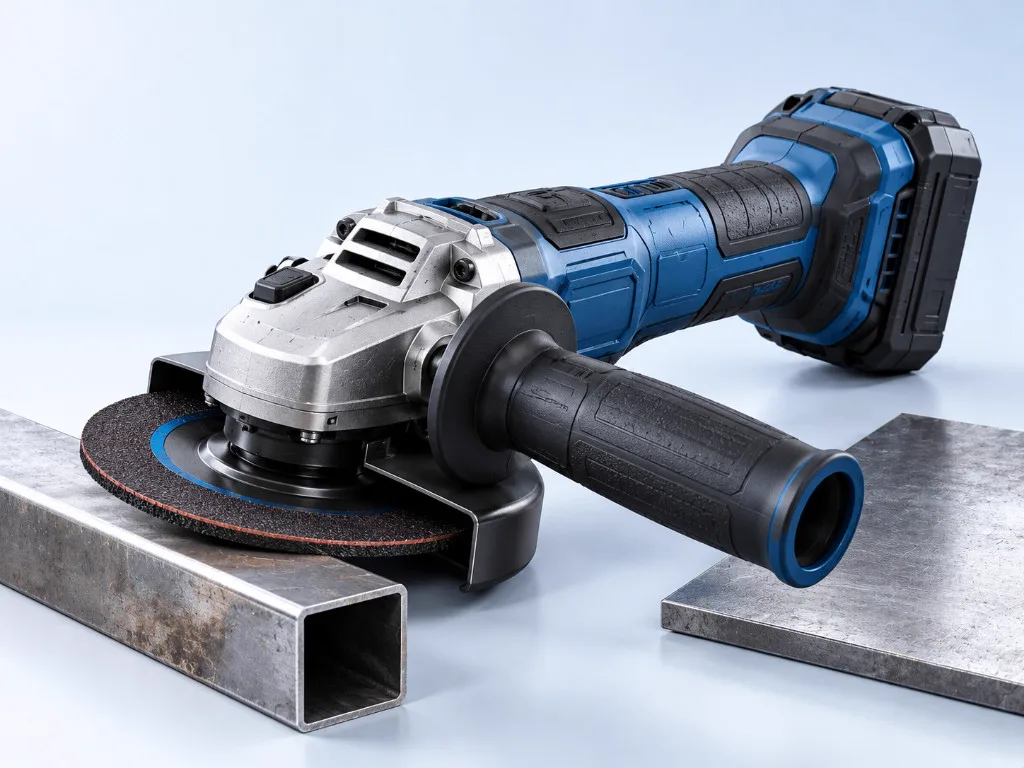
Angle grinder

An angle grinder is made for cutting and grinding metal — quick and powerful, but also aggressive. It is not automatically the best tool for wood, even though people sometimes use it that way.

Belt sander

A belt sander is better for flattening large surfaces — boards, doors and worktops where you need an even result across the whole face.

Straight grinder

A straight grinder is for tight spaces, corners and internal areas where an angle-grinder disc is too large.


Grinding versus cutting

Many people lump “grinding” and “cutting” together. With metal, the same angle grinder often does both with different discs — but with wood the goals are different: smoothing a surface is not the same job as cutting through it. Keep the end result in mind: do you want to remove material, flatten something, or separate a piece?

Cord or battery

For light, occasional work, a battery gives freedom: no cable, no socket needed. For heavy metal grinding in a workshop, corded power is often preferred so you never run short. PALĪGS considers both the job and how comfortable it is for you to work without a socket nearby.

Common mistakes when choosing a grinder or sander

  • Using an angle grinder to flatten wood because “it is the one I have”.
  • Choosing by power alone and ignoring how big and heavy the tool is in tight places.
  • Forgetting that discs, belts and sanding sheets are consumables — the right one changes the result.
  • Skipping eye, hearing and breathing protection — grinding throws sparks and dust.

Why the recommendation changes as you answer

Each answer shifts the score between tool types — which is why it matters to describe your real job. If you answer “I don’t know”, PALĪGS leans towards the safer, more versatile option instead of guessing.

How to use this helper

Choose what you do most often and where it is more convenient to work. If you are unsure, pick “I don’t know”. The recommendation narrows down the type — it does not force one “universal” grinder on every job.

Frequently asked questions

Is an angle grinder suitable for wood?
It can be used, but for flattening wood surfaces a belt sander is often more comfortable and gives a more even result.
When do I need a straight grinder?
When you need to grind in corners, inside parts or other tight places where an angle grinder does not fit.
Is a cordless grinder enough?
For light, occasional work often yes. For heavy metal grinding in a workshop, people often prefer a corded tool.
Why does the recommendation change as I answer?
Each answer shifts the score between tool types — so it matters to pick what you actually do most often.
Is grinding the same as cutting?
Not exactly. With metal one angle grinder can do both using different discs, but the goal differs: smoothing a surface versus separating a piece.
Do I need protective gear for grinding?
Yes. Grinding throws sparks and dust, so eye, hearing and breathing protection are worth planning from the start.

Useful guides

Trusted brands

Proven quality

Fast delivery

Locker €4.90 · LV · LT · EE

Easy returns

14 days

Secure payments

Online banking

Support

Help choosing