Account
Catalog
Information
Cart

Your shopping cart is empty!

Add products from the catalog to start shopping.

Continue

PALĪGS

How to choose a compressor?

A small cordless unit or a workshop compressor with a tank — tell us what you need air for, and PALĪGS will help you work out which type of compressor suits the job.

One helper — many solutions

PALĪGS

Start choosing

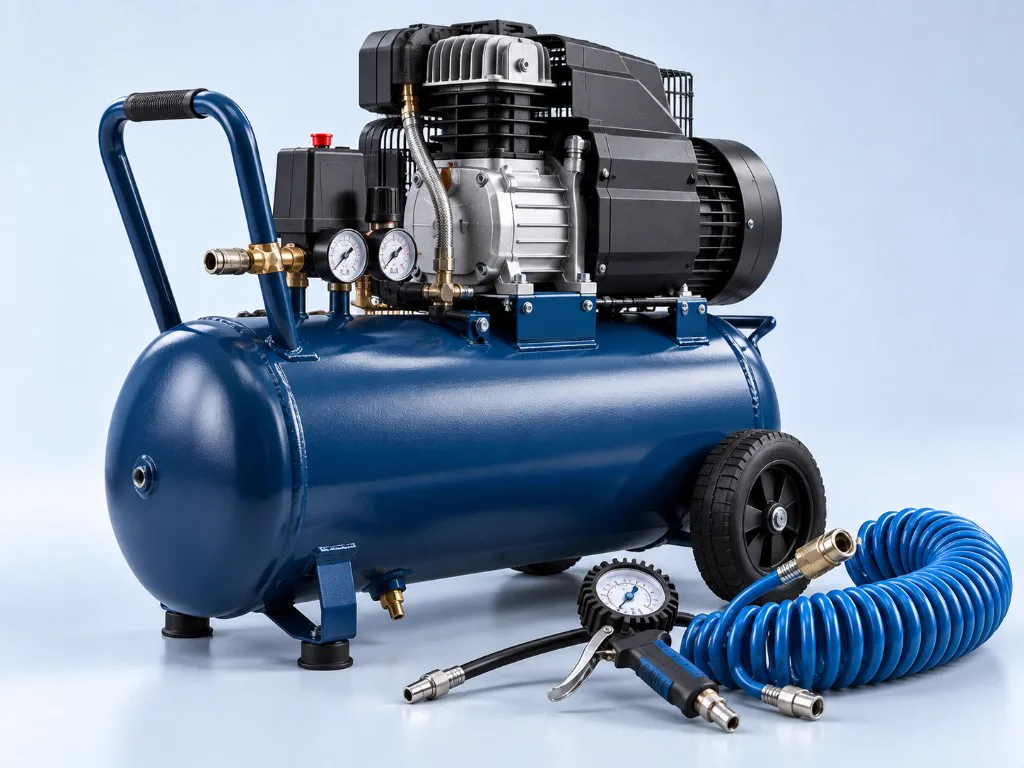
A compressor is not one tool in different sizes. There are portable options for tyres and light jobs, and workshop compressors with a tank for more frequent pneumatic use. If you understand this difference at the start, the choice becomes calm and clear.

Portable or stationary

Cordless / portable compressor

A cordless or portable compressor suits tyres, light blowing and situations where you need to carry the tool with you. It does not have to be a “small workshop compressor” — it is a different use case.

Workshop compressor with a tank

A workshop compressor with a tank is for when you need air more often, for longer, and with tools that consume more. The tank helps pressure from dropping during every short work cycle.
What kind of work do you do?

Occasional tasks — inflating tyres, a bike, a ball, blowing dust off a surface — rarely need a large tank. Regular workshop use, with several tools in sequence, is where a tank starts to pay off. If you are somewhere in between, think about how often you will actually use it and how long each session lasts.

What PALĪGS keeps separate

Pneumatic tools — spray guns, wrenches and others — are a separate group. This helper chooses the compressor itself. Pressure and litre figures matter after the type is clear, not before it.

Common mistakes when choosing a compressor

  • Choosing by a single number such as bar or litres without thinking about the work.
  • Buying a large workshop compressor for occasional tyre inflation.
  • Expecting a small portable unit to power air tools that need a steady flow.
  • Forgetting to plan where it will live — noise, space and a nearby power supply all matter.
  • Not checking that the tool you plan to connect is compatible with the compressor.

If you do not know the pressure

Choose “I don’t know”. PALĪGS will start from the portable or stationary type, not from technical figures, and you can narrow it down in the catalogue later.

How to use this helper

Tell us what you need the compressor for and whether it must be portable. If you are unsure, choose “I don’t know”. The suggestion is based on the scenario, not just on bar.

Frequently asked questions

Are pneumatic tools the same thing?
No. This helper chooses the compressor. Pneumatic tools are a separate group.
Is a cordless compressor enough for tyres?
Often yes for home and car use. For heavier pneumatic work in a workshop you usually need a tank and a mains-powered unit.
When do I need a large tank?
When your tools use a lot of air and the compressor must not stop frequently — typically in a workshop or for heavier use.
What if I do not know the pressure I need?
Choose “I don’t know” — PALĪGS starts with a portable or stationary type rather than technical figures.
Is a bigger compressor always better?
No. A larger unit brings more weight, noise and space needs, so it only makes sense if your work actually requires it.
Can I use one compressor for different jobs?
Sometimes, within limits. Occasional inflation and light blowing are very different from continuous pneumatic work, so the first question is how you will use it.

Useful guides

Trusted brands

Proven quality

Fast delivery

Locker €4.90 · LV · LT · EE

Easy returns

14 days

Secure payments

Online banking

Support

Help choosing