
When do you need a rotary hammer, not an impact drill?
Many people buy a “bigger drill” when they actually need a rotary hammer. Others buy a rotary hammer to hang hinges — and fight the weight and SDS bit where an impact drill would do. The difference is not price — it is how the tool hits and which shank fits.
Practical comparison from Scheppach. Drill basics: how to choose a cordless drill. V / Ah / Nm: what V, Ah and Nm mean.
Short answer
- Impact drill — driving screws, drilling wood/metal, light brick/concrete with a cylindrical bit.
- Rotary hammer (SDS-Plus) — holes in concrete/brick with an SDS bit; often a chiselling mode too.
What differs technically
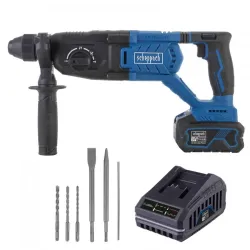
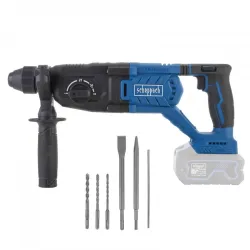
BC-DH290-X SET L and BC-DH290-X bare: SDS-Plus, up to 2.8 J. Impact-drill “hammer” mode is a different mechanism. Plan bits with SDS vs cylindrical shank and how to choose bits.
When an impact drill is enough
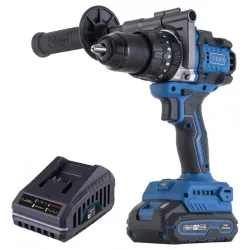
- BC-CD70SC-X SET S — up to 70 Nm; concrete up to 8 mm on the card.
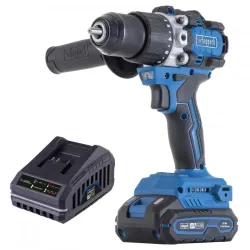
- BC-CD150-X SET S — up to 150 Nm; concrete up to 13 mm; side handle and anti-kickback.
Range: Rotary hammers · Impact drills · Drilling and driving.
Common mistakes
- Buying a rotary hammer because it “looks serious” for hinge screws.
- Expecting 70–150 Nm to replace SDS in hard concrete.
- Buying an SDS bit for a keyed chuck (or the reverse).
- Buying a bare tool without a GEN2 battery.
FAQ
Is “hammer” mode a rotary hammer?
No. SDS + Joules vs a different impact mechanism.
Do you need both?
Furniture + frequent concrete — often yes. Rare concrete — start with an impact drill.
Before you buy
How often concrete, how deep, GEN2 battery already at home? Then impact drill or rotary hammer. Bits: bits by material. Eyes: safety glasses or protective gear.
Reviews
Be the first to review this article.
Write a review