
Ratchets and sockets: what 1/4, 3/8 and 1/2 mean
Two numbers get glued together: the drive square (1/4, 3/8, 1/2 inch) and the opening in millimetres (9, 10, 14 mm). The first is which ratchet the socket sits on. The second is the nut. This page keeps them apart.
| Mark | Read it as | Mistake |
|---|---|---|
| 1/4, 3/8, 1/2 | Drive square | Thinking 1/2 means “a 13 mm socket” |
| 9 mm, 10 mm, 14 mm | Wrench opening | Forcing 1/4 onto a 1/2 ratchet with no adapter |
| 6- vs 12-point | How many flats hold the nut | 12-point “always better” |
| Impact | Made for an impact wrench | A chrome socket in impact |
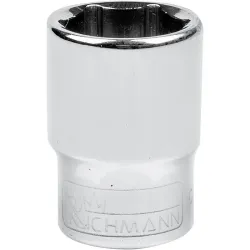
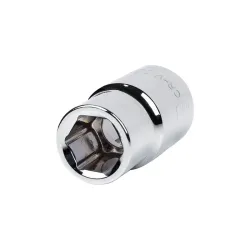
RICHMANN 42-C1410 — socket 1/4, 10 mm. RICHMANN 42-C1509 — 1/2, 9 mm. Small millimetres, different squares.
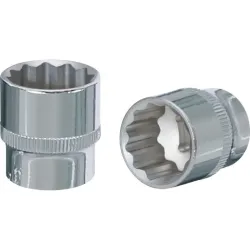
KS Tools 918-1333-E — 12-point, 1/2", 14 mm, CHROMEplus. 12-point turns in a tighter angle; 6-point usually holds a rounded nut better. Read “12-point” on the card.
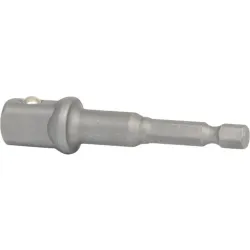
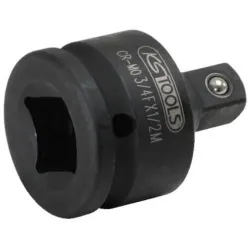
KS Tools 514-1108-E — hex adapter 1/4" × 1/2". KS Tools 515-1372-E — impact adapter F3/4" × M1/2". An impact adapter is not a chrome socket and not a magnetic bit holder.
DeWalt DT7462 — compact impact 8 mm nut setter — not a 1/2 chrome socket. SPECIALIST+ 24-2-037 — magnetic holder 8 × 65 mm; 24-2-040 — 13 mm. That is bit work, not a 1/2 ratchet.
How to use: square on the ratchet; mm on the nut; impact or not. Ratchets and sockets. Bits: PH PZ TX.
Sources: square/mm from the cited cards (19.10.2026.).


Reviews
Be the first to review this article.
Write a review