
How to choose safety glasses, gloves and hearing protection
Protection is chosen by risk, not “so it is in a box”. Chips in the eyes, oil on hands, saw noise, grinding dust — each has its own answer. One “universal kit” rarely covers everything well.
Delta Plus examples from safety glasses, work gloves, cut-resistant gloves, ear muffs, respirators and helmets.
This is a practical buyer guide — not legal advice and not a company health and safety manual.
Eyes — the first thing people forget
When drilling and sawing, chips fly faster than you can close your eyes “by feel”.
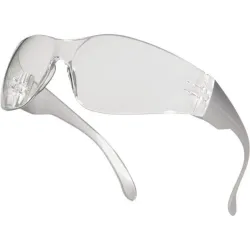
- Brava2 clear — polycarbonate, soft temples, side shields; comfortable with a helmet and muffs.
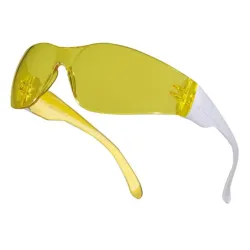
- Brava2 yellow — about 25 g, UV400, scratch-resistant coating.
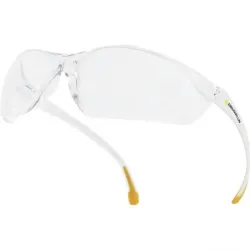
- Meia clear — single polycarbonate lens, EN166:2001, AR-UV400.
Clear and tinted lenses suit different jobs and lighting. If you need glasses over your prescription pair, look at over-spec types such as Kilimanjaro. “Any sunglasses from the drawer” is not the same as work glasses with side protection.
Hands — oil, cuts, feel
- Nitrile-coated gloves — waterproof, for oily and greasy environments, cotton liner.
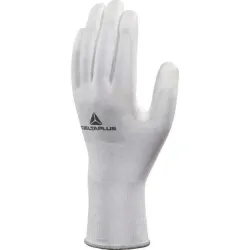
- Cut-resistant gloves, class 3 — seamless knit, no seams, PU on palm and fingertips (size, for example, 9).
- Leather goatskin gloves — different feel and use than cut-resistant knit; size still matters.
Oily work and cutting need different coatings. There is no “universal” size — take what fits your hand. Gloves that are too large are dangerous near rotating tools; too small — you will not wear them and they stay in the box.
Hearing — SNR is not magic
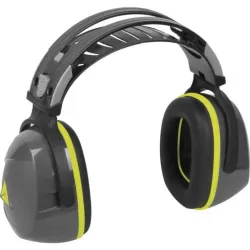
Interlagos muffs — SNR 33 dB, ABS shells, foam pads, adjustable band. Interlagos for helmet — same SNR, mount on the helmet.
Compare SNR to the noise in your work. 33 dB does not mean every machine becomes “quiet”. Circular saw, compressor, mitre saw — different levels. If you work often and long, hearing protection is part of the tool, not an “option”. For quieter compressors see also quiet compressor (if that is your noise source).
Breathing and head
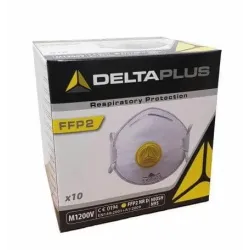
FFP2 masks, 10 pcs — disposable, FFP2 NR D, adjustable nose clip. Filter cartridges for a half-mask are a different solution, not a substitute for FFP2 packs. For dust from grinding or sawing FFP2 is a typical home/DIY start — but read the pack and use limits.
ZIRCON helmet — basic head protection. Electrical rating labels (for example on some BASEBALL models) are model-specific — do not copy from one helmet to another. Brava2 can be worn with a helmet, but the helmet still must match the job.
How to build a kit by job
- Drilling / sawing: at least glasses and gloves; loud work — muffs; dusty work — FFP2.
- Oily / mechanical work: nitrile or suitable gloves plus glasses if there is splash.
- Cutting with risk: cut-resistant gloves (right class) plus care at the blade.
- Work with a helmet: helmet plus compatible muffs/glasses, not “whatever is lying around”.
Tool choice: cordless drill and wood saw.
Typical mistakes
- Buying “one glove pair for everything”.
- Working without glasses “because it is quick”.
- Mixing FFP2 with “any medical mask from the drawer”.
- Wrong size — and then not wearing protection at all.
Before you buy
Write down risks for your work (eyes / hands / hearing / dust / head). Then buy specific protection, not an abstract “safety kit”. Three items you actually use beat ten sitting in a bag.
Related products
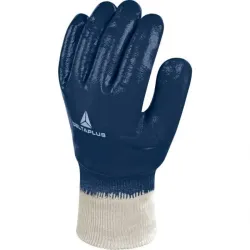
Nitrile coated gloves, blue, Delta Plus
Delta Plus
Reviews
Be the first to review this article.
Write a review